
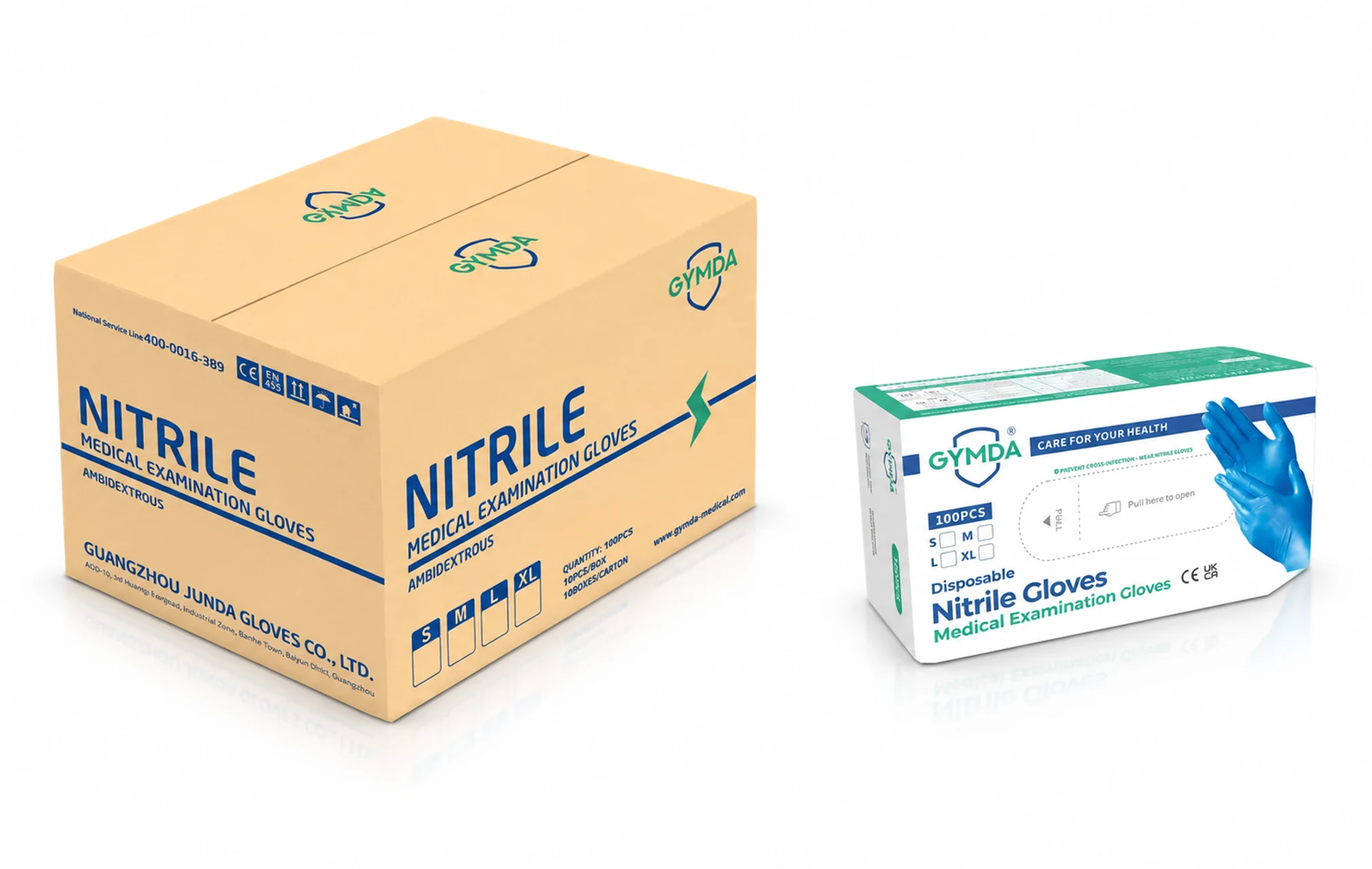
Buyers comparing disposable medical examination gloves almost always meet two phrases: freedom from holes and AQL. Datasheets compress them into a single cell—“AQL 1.5”—and RFQs often copy the cell without asking what sampling plan, which standard, or which glove category sits behind the number.
That shorthand creates a stubborn myth: that AQL 1.5 means “about 1.5% of the gloves in every delivered box are allowed to leak.” That is not how acceptance sampling is explained in public laboratory summaries of medical-glove standards. AQL is a lot acceptance criterion under a sampling plan, not a casual warranty that a fixed percentage of every carton may fail.
This guide restates what public sources such as SATRA’s EN 455 assessment article say about water-leak testing and AQL figures, clarifies examination versus surgical educational categories, and shows how to write RFQ wording that names the destination standard instead of one global slogan. It links to our deeper series overview in EN 455 medical gloves and to U.S. specification conversation in ASTM D6319 nitrile examination gloves.
It does not publish JUNDA factory AQL results, and it does not claim that any JUNDA or GYMDA SKU meets EN 455, ASTM, ISO, or any named acceptance level. It is not medical advice. Confirm against the current standard text, destination labeling, and the inspection records that belong to the exact SKU and lot.
Freedom from holes in plain language
“Freedom from holes” is barrier language: the glove should not let water (and, by implication in medical-barrier thinking, other fluids) pass through unintended openings under the test conditions named by the standard.
SATRA’s public article on assessing single-use medical gloves to EN 455 describes the EN 455-1 water test as follows:
- The glove is secured on a tube and suspended vertically.
- About 1 litre of water is poured into the tube.
- The glove is inspected visually for leakage immediately, and again after 2–3 minutes.
That description is a public laboratory restatement of how the test is conducted. It is not a JUNDA work instruction and not a promise about any product line.
Buyers should notice three separate ideas:
- The test method — how leaks are looked for (water volume, timing, visual inspection).
- The sampling plan — how many gloves from a lot are tested, and under which inspection level.
- The acceptance level (AQL or equivalent language) — how many failing units the plan will tolerate before the lot is judged to fail the requirement.
Confusing (1) with (3) is how the “1.5% of every box” myth starts.
What AQL is — and what it is not
AQL stands for Acceptance Quality Limit (also discussed as acceptance quality level in many buyer documents). In the medical-glove context summarized by SATRA for EN 455-1, clause-level requirements use statistical sampling in accordance with a standardised AQL, referencing the sampling scheme in ISO 2859-1.
SATRA’s restatement for EN 455-1 includes:
- General inspection level 1, code letter L
- 200 gloves tested under that described scheme
- Examination gloves: AQL 1.5
- Surgical gloves: AQL 0.65 (SATRA notes that the surgical AQL was an addition in the 2020 version of the standard)
- Under that illustration: a maximum of 7 failures for examination gloves, or 3 failures for surgical gloves, before the overall batch is considered to fail the requirements based on that AQL
Use those figures only as a SATRA restatement of the sampling plan—not as a marketing slogan, not as a factory QC promise, and not as JUNDA inspection data.
The myth to strike from RFQs
| Myth buyers sometimes write | Better buyer wording |
|---|---|
| “AQL 1.5 means 1.5% of delivered gloves may leak.” | “Name the destination standard, the freedom-from-holes method, the sampling plan reference, and the acceptance level required for examination (or surgical) gloves.” |
| “Send us AQL 1.5 gloves” with no market named | “For [destination market], confirm which medical-glove standard applies and provide lot inspection evidence for the shipped SKU.” |
| “Water-tested = AQL proven” | “State which method was used and which acceptance criterion applies to the lot.” |
| “One global AQL for every country” | “Name the destination standard; figures can differ by region and by examination vs surgical category.” |
AQL does not mean a supplier is free to ship a fixed percentage of leakers in every carton as a commercial allowance. It is a statistical lot-acceptance idea used with sampling plans. If a lot fails the plan’s accept/reject rules, the lot fails—regardless of casual percentage talk.
Examination versus surgical: educational categories only
SATRA’s EN 455 summary treats examination and surgical gloves differently for freedom-from-holes AQL (1.5 vs 0.65 in the restatement above). Public summaries of EU MDR classification also typically describe examination gloves as Class I (transient, not invasive) and surgical gloves as Class IIa (surgically invasive), with different conformity expectations.
Keep that distinction educational:
- Do not treat examination and surgical gloves as interchangeable in a tender.
- This article does not claim that JUNDA manufactures or supplies surgical gloves.
- If your clinical use is examination only, write examination—do not copy a surgical AQL slogan to look “stricter” without understanding the claim set and documentation path.
For the full EN 455 part-by-part buyer map, see EN 455 medical gloves.
ASTM-side conversations: ask for method and acceptance level
In U.S. and international industry talk, freedom from holes / water leak is often discussed with methods such as ASTM D5151 and specifications such as ASTM D6319 for nitrile examination gloves. See ASTM D6319 nitrile examination gloves.
Important buyer discipline:
- A method (how you look for holes) is not by itself an AQL.
- A specification may reference physical and barrier requirements; it still does not replace naming the acceptance language your market requires.
- This article does not invent an ASTM AQL figure. If your RFQ is ASTM-facing, ask for the freedom-from-holes method and the acceptance level named for that market, and confirm against current FDA/ASTM public pages and the SKU file set.
FDA’s Medical Gloves page discusses leak resistance among the performance topics generally reviewed for medical gloves as Class I reserved devices requiring 510(k). That is a pathway reminder, not a published AQL for any JUNDA product.
Other regions: name the destination standard
Public literature and competitor blogs sometimes cite other regional or ISO glove documents with their own AQL figures. Buyers should not paste a single “world AQL” from a marketing page into every tender.
Practical rule:
- Name the destination market and the standard series you actually need (for example EN 455 for a European medical claim set; ASTM/FDA discussion for a U.S. medical claim set).
- If an ISO document such as the ISO 11193 family appears in your tender language, confirm the current ISO text for your market rather than quoting an unverified blog number in this article.
- Documentation should be confirmed by product and market. JUNDA’s /quality page discusses masked previews and file types; a certificate catalogue lists types of files available, not proof that every SKU carries every file.
Polymer and finish still matter next to AQL. A leak plan does not answer latex-protein, powder-free, food-contact, or chemical PPE questions. See latex-free gloves, powder-free gloves, food-grade gloves, and chemical resistant gloves. Process questions such as chlorination or accelerator declarations are separate again—see chlorinated nitrile gloves and accelerator-free nitrile gloves.
Comparison table: method, sampling, acceptance
| Idea | What it answers | Example from public EN 455-1 restatement (SATRA) | What buyers should write |
|---|---|---|---|
| Test method | How leaks are detected | ~1 L water; inspect immediately and after 2–3 minutes | “Which freedom-from-holes / water-leak method applies?” |
| Sampling plan | How many units from the lot are tested | ISO 2859-1; general inspection level 1; code letter L; 200 gloves in SATRA’s description | “Which sampling standard and inspection level?” |
| Acceptance level | When the lot fails | Exam AQL 1.5 (max 7 fails in that illustration); surgical AQL 0.65 (max 3 fails) | “Examination or surgical positioning? Which AQL / acceptance language?” |
| Destination pathway | Which rulebook governs the claim | EN 455 vs FDA/ASTM discussion vs non-medical | “Name market + standard; do not use one global slogan.” |
| Lot evidence | What proves the shipped goods | Lot coding + agreed inspection / COA records | “Provide records for the exact SKU and lots shipped.” |
Figures in the EN 455 column are SATRA’s public restatement, not JUNDA factory data.
How to write RFQ wording that avoids the myth
- Destination market — country or region where the claim will be made.
- Intended use — medical examination, non-medical, or surgical only if that is the real clinical use (educational category; this article does not claim JUNDA supplies surgical gloves).
- Polymer and finish — for example nitrile, powder-free if required.
- Standard series in scope — e.g. EN 455-1 discussion, ASTM-facing method/spec discussion, or another named destination text.
- Freedom-from-holes method — name it; do not write only “water-tested.”
- Sampling plan reference — e.g. ISO 2859-1 discussion if that is what the destination standard uses.
- Acceptance level — examination vs surgical AQL (or the acceptance language that standard actually uses).
- Lot / batch evidence for shipped lots.
- Other pathways if needed — FDA 510(k) conversation for U.S. medical gloves; food-contact; chemical PPE; latex-free policy.
- Documentation by product and market — see /quality; do not invent certificate numbers or copy sibling SKU files.
Commercial buying terms, lead time, and sample logistics are on /buying. Prefer linking that page rather than repeating commercial numbers here. Wholesale and OEM structure tips: wholesale nitrile gloves OEM checklist. Nitrile examination selection: choose nitrile examination gloves.
FAQs
Q1. Does AQL 1.5 mean 1.5% of every delivered box may leak? No. In the EN 455-1 context restated by SATRA, AQL is used with a statistical sampling plan (ISO 2859-1 illustration). It is a lot acceptance criterion—not a casual commercial allowance that a fixed percentage of every carton may fail.
Q2. Why do examination and surgical discussions use different AQL figures? SATRA’s public summary cites AQL 1.5 for examination gloves and AQL 0.65 for surgical gloves under EN 455-1, and notes that the surgical figure was added in the 2020 version. Those are standard-sampling expectations in that restatement—not a quality slogan and not JUNDA inspection data.
Q3. If gloves are “water-tested,” is AQL automatically proven? No. Method, sampling plan, and acceptance level are separate questions. Ask for all three for the destination standard that applies.
Q4. Is EN 455-1 the same as ASTM D5151 or ASTM D6319? No. They are related industry conversations about barrier performance, but they are not automatic synonyms. See EN 455 medical gloves and ASTM D6319 nitrile examination gloves. Ask which method and acceptance language your market requires.
Q5. Can I use one AQL slogan for every export market? Risky. Public literature may cite different figures under different regional or ISO texts. Name the destination standard and confirm the current text for that market rather than copying a competitor blog.
Q6. Does this article claim a JUNDA factory AQL? No. Guangzhou Junda Gloves Co., Ltd. (JUNDA) manufactures disposable programs under brands such as GYMDA and supports OEM/private-label discussion. Production bases include Guangzhou and Shaoguan (GYMDA Shaoguan disposable base). Inspection evidence, if required, must be confirmed for the exact SKU and lots—by product and market—not inferred from this educational article.
Next steps for buyers
When you write the next tender, replace “AQL 1.5 gloves” with four lines: destination market, examination versus non-medical intended use, the freedom-from-holes method named by the relevant standard, and the acceptance level / sampling language that standard actually uses. Then ask for lot evidence that belongs to the shipment.
To discuss disposable glove categories for your market, contact JUNDA by Email at sales@jundagloves.com or via the site WhatsApp button. Share destination market, intended use, polymer preference, and which barrier documents you need so the conversation stays tied to real inspection language—not to the myth that AQL is a casual leak percentage.