
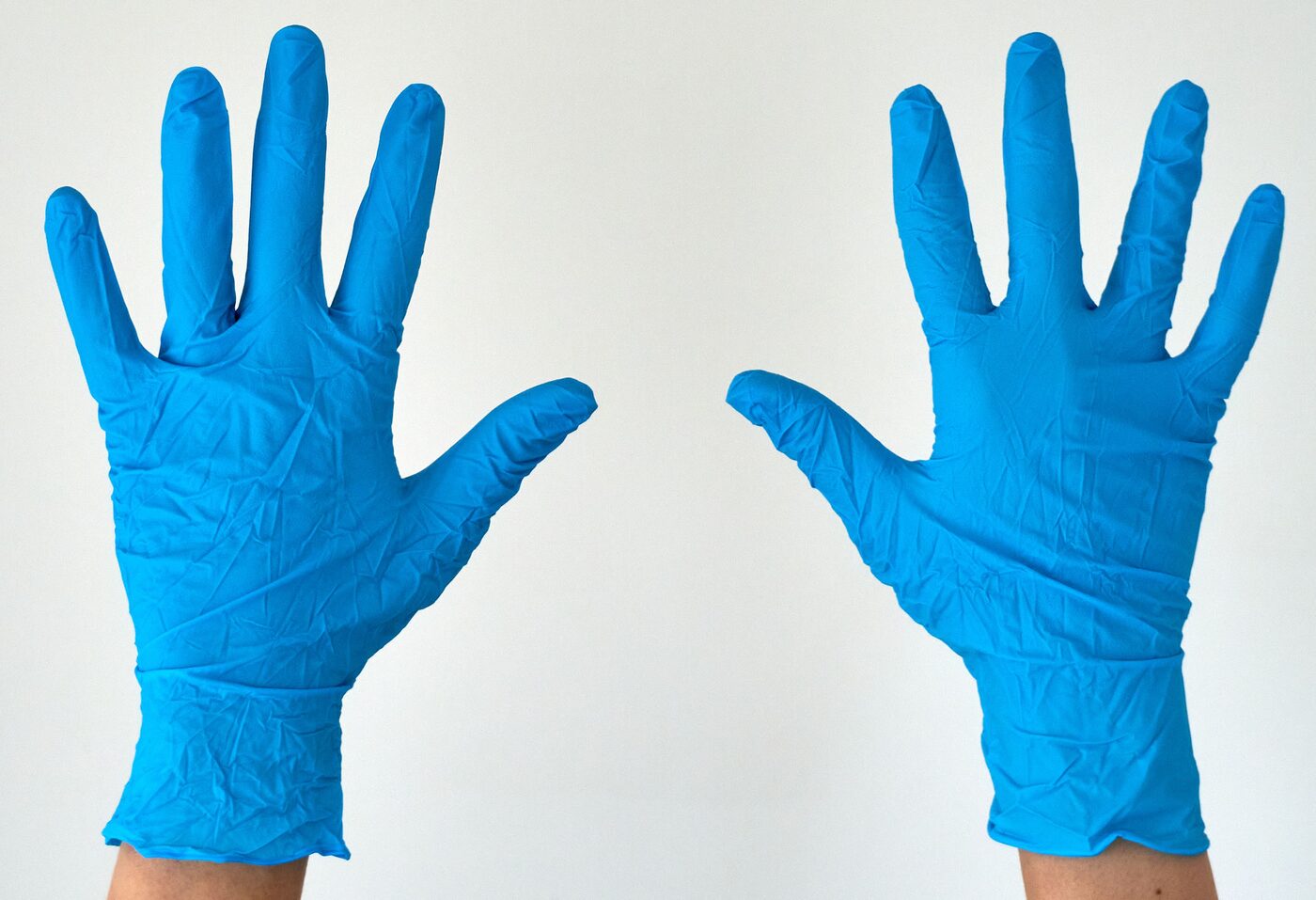
If you buy disposable nitrile gloves for clinics, labs, food handling, cleaning, or industrial programs, you may see suppliers mention chlorination, chlorinated gloves, or halogenation. The words sound technical. For procurement, the useful question is simpler: what finishing step is being described, and how does it relate to powder-free donning—not to polymer choice, and not to chemical-resistance claims.
This guide explains chlorination at a public-education level for B2B buyers. It does not publish factory recipes, chlorine concentrations, dwell times, or claim that any specific JUNDA SKU is chlorinated. Process details belong in a supplier discussion tied to the exact product you will receive.
What chlorination means in glove manufacturing
In disposable glove manufacturing, chlorination (a form of halogenation) is a common surface-finishing step. Industry and academic descriptions generally describe immersing or treating the cured glove film with an aqueous chlorine-containing solution, then neutralizing and thoroughly rinsing, so the rubber surface becomes less tacky and easier to don—often as an alternative to intentionally added donning powder.
Public manufacturer explainers and process literature typically frame chlorination as changing the surface of the glove film (for example reducing tack on the donning side, and sometimes adjusting feel or grip on the outer surface), followed by washing to remove residues. Cleanroom and medical-glove process overviews also discuss on-line chlorination (while gloves are still on formers) and off-line chlorination (after stripping), including double-sided approaches when both surfaces need treatment. Treat those as industry process families—not as a specification for any one factory line.
What chlorination is not:
- It is not the same as choosing nitrile versus latex versus vinyl. Polymer choice is a material decision; chlorination is a finishing decision that can apply to several elastomer families.
- It is not automatic proof of chemical resistance. Thin disposable nitrile and reusable chemical gloves serve different jobs. See the separate chemical resistant gloves guide for EN ISO 374–style selection thinking.
- It is not a certificate number. “Chlorinated” on a brochure is a process/finish description until labeling, residual-powder evidence, and destination claims are confirmed for the shipped SKU.
How chlorination relates to powder-free labeling
Historically, many medical gloves used donning powder (often cornstarch-based absorbable powder) to make gloves easier to put on and to reduce sticking during manufacture and packing. As powder-free medical gloves became the expected baseline in many markets, manufacturers commonly used finishing routes—including chlorination and/or polymer coatings—to manage tack without intentionally adding donning powder to the finished glove.
Powder-free generally means the finished glove is marketed without intentionally added donning powder. Public FDA materials have long discussed that manufacturing can still leave trace residual powder or debris, and have referenced industry test methods such as ASTM D6124 (residual powder on medical gloves). Historical FDA staff guidance also discussed residual/trace powder concepts for non-powdered medical gloves. Treat residual powder as a quality and labeling topic—not as a brand performance slogan.
For a fuller powder-free buyer framing (including the U.S. FDA rule on powdered medical gloves), see Powder-Free Gloves Explained.
Chlorination vs. polymer coating (buyer-level distinction)
| Finishing approach | What buyers usually hear | What to clarify in an RFQ |
|---|---|---|
| Chlorination / halogenation | Surface treated to reduce tack and aid donning; may affect grip/feel | Which surface(s) are treated; how residual chemistry is rinsed/controlled; how powder-free is labeled for the destination market |
| Polymer / hydrogel / other donning coat | A coating layer intended to improve donning feel | Coating type at category level; adhesion/aging discussion if relevant; still confirm powder-free residual rules where medical labeling applies |
| Donning powder (historical / non-target for many medical programs) | Intentionally added lubricant powder | Usually not the target for U.S. powdered medical glove categories after the FDA ban rule; map other markets separately |
Many factories use one route, the other, or a combination. Do not assume “powder-free nitrile” always means “chlorinated,” or that “chlorinated” always means “medical device cleared.” Ask for the finish description that matches the exact SKU and labeling you will receive.
What buyers should ask suppliers
Procurement teams get better results when they separate finish, polymer, intended use, and destination documentation.
1. Finish and donning
- Is the SKU positioned as powder-free for the destination market?
- If a finish is described as chlorinated / halogenated / polymer-coated, which surface(s) are treated?
- For medical categories, is residual powder discussed with a recognized method such as ASTM D6124 (or an equivalent method accepted in that market)?
- Can current labeling artwork and declarations match the exact lot/SKU shipped?
2. Polymer and allergy pathways
Nitrile is commonly chosen when a latex-free pathway is required. Chlorination does not turn a natural rubber latex glove into a latex-free glove. If latex protein allergy policy matters, specify latex-free polymer (for example nitrile or vinyl) separately from powder-free finish language.
3. Intended use vs. marketing adjectives
Ask whether the product is intended as:
- A medical examination (or other medical) glove under destination medical-device rules
- A PPE glove under workplace safety rules
- A general-purpose / industrial / food-handling glove with different claim boundaries
Do not treat “hospital grade,” “premium chlorinated,” or similar brochure phrases as a regulatory pathway. Documentation should be confirmed by product and market—masked previews and catalogue types are discussed on JUNDA’s /quality page; do not invent certificate numbers from a blog article.
4. Chemical contact is a separate conversation
If the workplace involves solvents, oils, acids, or prolonged chemical contact, run a chemical-selection discussion (SDS list, contact time, splash vs. immersion). Chlorination and powder-free status do not replace permeation thinking. Link that work to chemical resistant gloves and category pages such as disposable nitrile gloves.
Practical notes for end users (generic, not medical advice)
- Dry hands before donning; moisture can make powder-free films harder to put on.
- Avoid jewelry that can tear thin disposable films.
- Change gloves between tasks or after contamination; do not wash and reuse disposable gloves unless a product is explicitly designed and labeled for that use.
- Remove gloves carefully to limit skin contact with the outer surface.
- Dispose of gloves according to local workplace and clinical waste rules.
FAQs
Q1. Are chlorinated nitrile gloves the same as powder-free nitrile gloves? Not always by definition. Chlorination is a finishing process often used to reduce tack so gloves can be powder-free. Powder-free is a labeling / residual-powder concept for the finished glove. A powder-free nitrile glove may use chlorination, a polymer coat, another route, or a combination. Ask the supplier which finish applies to your SKU.
Q2. Does chlorination make gloves chemically resistant? No. Chlorination primarily addresses surface tack and donning (and may affect grip/feel). Chemical suitability depends on the chemical, contact pattern, thickness family, and—where claimed—relevant permeation frameworks. Use a chemical glove selection process rather than finish language alone.
Q3. Is chlorination only for latex gloves? No. Public industry explainers describe chlorination for latex and nitrile (and related elastomer) gloves. On natural rubber latex, washing associated with finishing is also discussed in public literature in the context of reducing surface extractables—but that does not convert latex into latex-free. Keep polymer and finish as separate RFQ lines.
Q4. Can a powder-free / chlorinated glove still have residual powder? Public FDA discussion of non-powdered medical gloves acknowledges that manufacturing can leave trace residual powder/debris, and ASTM D6124 is a widely cited method for measuring residual powder on medical gloves. Buyers should ask how residual powder is controlled and evidenced for the relevant product category and market.
Q5. Should importers put “chlorinated” in a tender? Only if the finish is a real requirement for your users or brand standard. Prefer clear requirements: intended use, polymer, powder-free confirmation, size range, packaging, destination documentation pathway, and—if needed—finish family (chlorinated / polymer-coated / other) without vague “hospital grade” language.
Q6. How does JUNDA discuss finish options without over-claiming? At category level. Guangzhou Junda Gloves Co., Ltd. (JUNDA) manufactures disposable programs under brands such as GYMDA and supports OEM/private-label discussion. Production bases include Guangzhou and Shaoguan (GYMDA Shaoguan disposable base). Finish details, residual-powder evidence, and destination documents should be confirmed against the live product discussion and current labeling—not invented from a blog. Start from disposable nitrile gloves, /oem, and /buying.
Next steps for buyers
If you are comparing powder-free nitrile options for export or private label, separate four decisions: intended use, polymer, finish (chlorination / coating / other), and destination documentation. Related reading: powder-free gloves and chemical resistant gloves.
To discuss disposable nitrile categories for your market, contact JUNDA by Email at sales@jundagloves.com or via the site WhatsApp button. Share destination market, intended use, polymer preference, and whether finish/donning requirements matter for your brand—so the conversation stays tied to real labeling, not generic process slogans.