
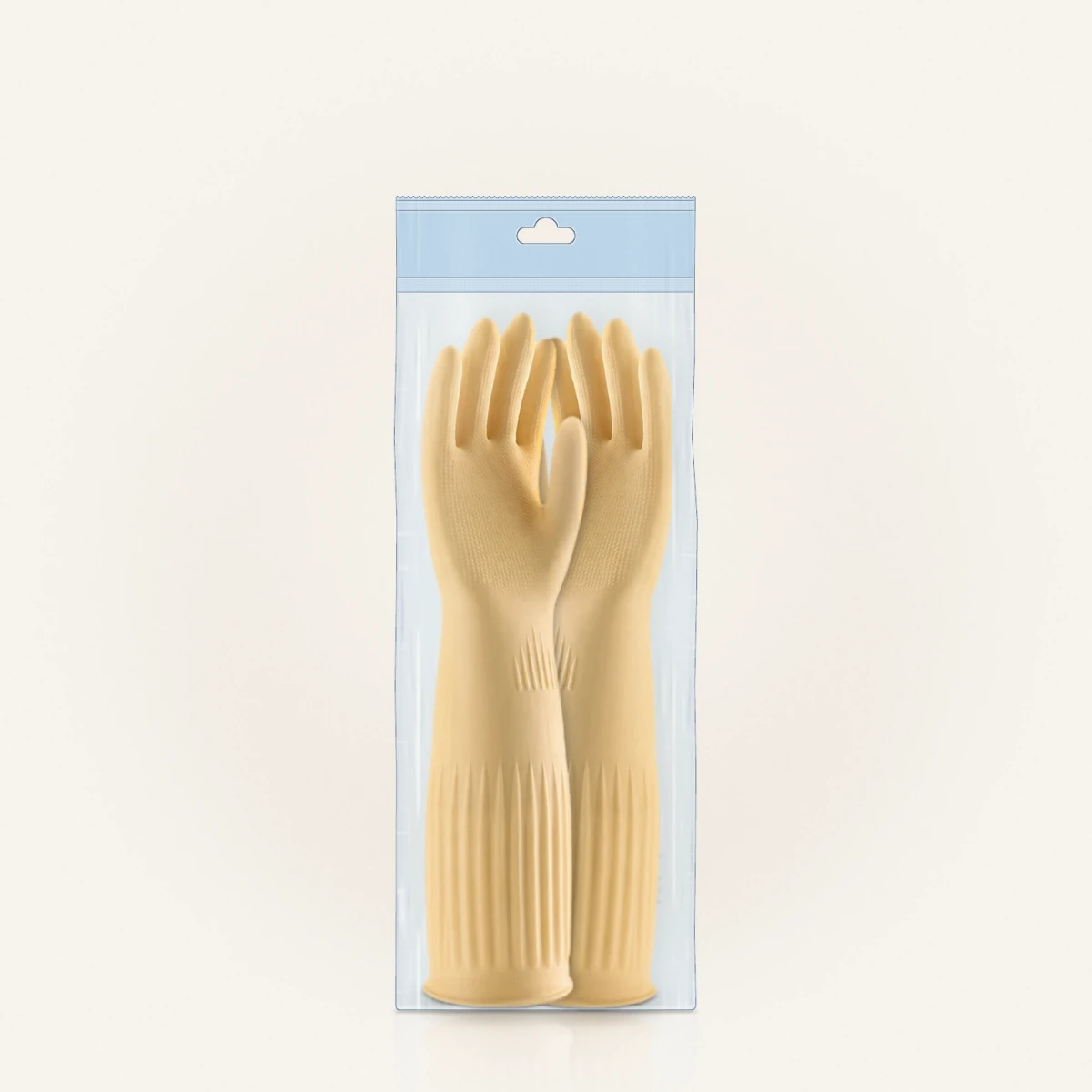
Protective-glove RFQs still often say “EN 388 certified,” “CE EN 388,” or a short code such as “4543” and stop there. That shorthand is too thin. EN 388 is the commonly used European standard for protective gloves against mechanical risks. The numbers and letters next to the hammer pictogram are test performance levels. They are not a medical-glove rating, and they are not a substitute for naming the actual job risk.
SATRA’s public article on the standard discusses the current text as EN 388:2016+A1:2018. SATRA states that this document is intended to be used together with EN ISO 21420:2020, the general requirements and test methods standard for protective gloves. For that general-requirements conversation, see EN ISO 21420 protective gloves.
This guide restates SATRA’s public overview at buyer level and lists the questions that belong in an RFQ.
It does not claim that any JUNDA, Yue Long, Baijiebang, or other JUNDA protective or disposable line is EN 388 tested, CE type-examined, or marked with a particular performance code. It is not legal, regulatory, or occupational-safety advice. Confirm requirements against the current standard text, the user information supplied with the glove, destination PPE rules, and the files that belong to the exact SKU to be offered or shipped.
What EN 388 is — and what it is not
According to SATRA, EN 388:2016+A1:2018 specifies requirements, test methods, marking and information to be supplied for protective gloves against the mechanical risks of abrasion, blade cut (including the EN ISO 13997:1999 cut method), tear, puncture and, if applicable, impact. Each property is tested separately. A performance level is assigned to each result: the higher the number or the later the letter, the greater the claimed level of protection.
What EN 388 is not:
- It is not the general-requirements standard. Fit, innocuousness, sizing, marking and user information still sit with EN ISO 21420.
- It is not a chemical-protection rating. Chemical risks need a specific pathway such as EN ISO 374.
- It is not a medical-glove barrier standard. Single-use medical gloves follow a different conversation, such as EN 455 medical gloves.
- It is not, by itself, a CE mark or a licence to invent a certificate number from a catalogue.
- It is not a cut, puncture, or impact guarantee for every part of the glove, or for every object the wearer may meet at work.
SATRA also notes the effect of the EU PPE Regulation (EU) 2016/425: since 21 April 2019, it has been illegal to place gloves for mechanical protection on the EU market that have not been certified against the state of the art, which SATRA identifies as EN 388:2016+A1:2018. That is a market-placement point for the EU. It still does not turn a four-digit code on a brochure into a completed offer.
How to read the hammer pictogram
SATRA explains that gloves meeting EN 388:2016+A1:2018 show a pictogram followed by the performance levels of each mechanical test, in this order:
- Abrasion resistance (number)
- Circular blade cut resistance (number)
- Tear resistance (number)
- Puncture resistance (number)
- Straight-blade cut (a letter, from the ISO 13997 method)
- Optional P, if the glove meets the impact requirement
SATRA states that an X is used if either cut test has not been performed. For the first four tests, it is common to show 0 when level 1 is not reached. The pictogram itself is not to be used if the glove does not achieve at least level 1 or level A in at least one protective category.
A code copied into an email without the pictogram, the user sheet, or the test reports is incomplete. So is a code taken from a neighbouring SKU with a different coating, liner, thickness, or cuff.
What the tests usually measure
The figures below are SATRA’s public overview of EN 388:2016+A1:2018. They are not a substitute for the paid standard text, and they are not factory results for any JUNDA SKU.
Abrasion. Palm material is rubbed on a Martindale machine against 180-grit abrasive. SATRA lists four performance levels, with level 1 starting at 100 cycles and level 4 at 8,000 cycles. The performance of a single material is decided by the lowest of four specimens.
Circular blade cut (Coupe). A counter-rotating circular blade moves over the material under a stated contact force. A cut index is calculated against a control fabric, because blades vary in sharpness. SATRA lists five levels, from a level 1 index of 1.2 up to a level 5 index of 20.0.
Straight-blade cut (ISO 13997 / TDM). SATRA states that this method is fully included in EN 388:2016+A1:2018. It is used when the circular blade is dulled—SATRA describes the trigger as the control material’s cycles increasing by a factor greater than three in the first sequence. A straight blade makes a single pass; the result is the contact force needed to cut through 20 mm. SATRA lists letter levels A to F, from 2 N (level A) to greater than 30 N (level F). SATRA is explicit: there is no correlation between the two cut methods. If both results are given, the user instructions must state that the circular-blade result is only indicative and the straight-cut result is the reference.
Tear. Palm specimens are pulled apart in a tensile machine. SATRA lists four levels, from 10 N (level 1) to 75 N (level 4).
Puncture. A rounded stylus is pushed into palm material. This is not a hypodermic-needle test. SATRA lists four levels, from 20 N (level 1) to 150 N (level 4).
Impact, if claimed. SATRA says impact testing follows clause 6.9 of EN 13594:2015 and is now a mandatory test for gloves that incorporate specific impact-resistant properties. The marking P may be added if the requirement is met. SATRA also notes a required warning: if impact protection is claimed, user instructions must state which part of the glove is protected, and that the protection does not apply to the fingers.
SATRA records a further warning for gloves with tear performance of level 1 or greater: they should not be worn where there is a risk of entanglement with moving machine parts.
Why a four-digit code is not an RFQ
A string such as “4543” does not tell you:
- whether the circular-cut number is even meaningful, or should have been marked X because the blade was dulled;
- whether an ISO 13997 letter is missing, and therefore whether cut protection was actually assessed by the reference method;
- whether impact was claimed, and if so, on which part of the glove;
- whether the offer is PPE, medical, or another regulatory frame;
- whether the user information and marking on the shipped SKU match the brochure.
Ask the buyer—or rewrite the RFQ—to name the intended mechanical risk, the current EN 388 text the destination uses, the EN ISO 21420 general-requirements evidence, any other protection standards that belong with the job, and the files for the exact SKU.
RFQ checklist for EN 388-style conversations
- Destination market — European Union, United Kingdom, or another named market, and whether PPE rules apply.
- Intended mechanical risk and job — abrasion, cut, tear, puncture, impact, or a combination; plus any chemical, heat, or wet-work risk that EN 388 cannot cover.
- Regulatory frame — PPE, medical, food contact, or a mix that must be documented separately.
- Current mechanical-risk text — EN 388:2016+A1:2018, or the edition the destination actually uses; do not leave only “EN 388” or a leftover 2003 marking.
- General requirements — EN ISO 21420; see EN ISO 21420 protective gloves.
- How cut resistance is reported — circular-blade index, ISO 13997 letter, or both; and whether an X is explained.
- Impact claim, if any — which area is protected, and confirmation that fingers are excluded unless the current user information says otherwise.
- Construction — polymer, coating, liner, cuff, and whether the glove is reusable protective or a disposable product being asked to do a mechanical-risk job.
- Marking and user information — what ships with the goods, in which language, including entanglement and cut-method statements where they apply.
- Destination documentation confirmed by product and market — see /quality; do not invent certificate numbers.
- Batch evidence agreed in the buying terms for the shipment itself.
Buying terms, lead time, and sample logistics are summarized on /buying. Prefer that page over repeating commercial numbers in every article.
FAQs
Q1. Can I compare two gloves by the four numbers alone? Only with care, and not for cut resistance if one glove uses the circular-blade index and the other uses an ISO 13997 letter. SATRA states there is no correlation between those two cut methods.
Q2. Does a high abrasion level mean the glove is cut resistant? No. Each property is tested separately. A glove can rate well for abrasion and poorly for cut, or the reverse.
Q3. Is EN 388 a substitute for EN 455 or ASTM examination specifications? No. SATRA positions EN 388 as a mechanical-risk standard for protective gloves. Medical examination gloves follow a different pathway. See EN 455 medical gloves.
Q4. If the pictogram includes P, are the fingers impact-protected? Not on the basis of SATRA’s overview of the current EN 388 text. SATRA says user instructions must highlight that the claimed impact protection does not apply to the fingers.
Q5. Does this article claim that JUNDA protective gloves are EN 388 certified or carry a specific code? No, it does not. Guangzhou Junda Gloves Co., Ltd. (JUNDA) manufactures disposable programs under brands such as GYMDA, and latex protective programs under series such as Yue Long and Baijiebang, and supports OEM/private-label discussion. Production bases include Guangzhou and Shaoguan (GYMDA Shaoguan disposable base). Whether a given SKU has PPE files, which standards are in scope, and how marking and user information read must be confirmed against the live product discussion and current documents, by product and market.
Q6. Where should buyers start on the JUNDA website? Start from long-cuff latex protective gloves, household flock-lined latex gloves, /oem, /quality, and /buying. Ask for evidence tied to the exact offer, not a generic “EN 388” or four-digit slogan.
Next steps for buyers
To discuss protective or disposable glove categories for your market, contact JUNDA by Email at sales@jundagloves.com or via the site WhatsApp button. Share destination market, intended mechanical risk and use, construction, size range, and documentation needs so the conversation stays tied to real marking, user information, and current files—not to a brochure line that merely says “EN 388.”