
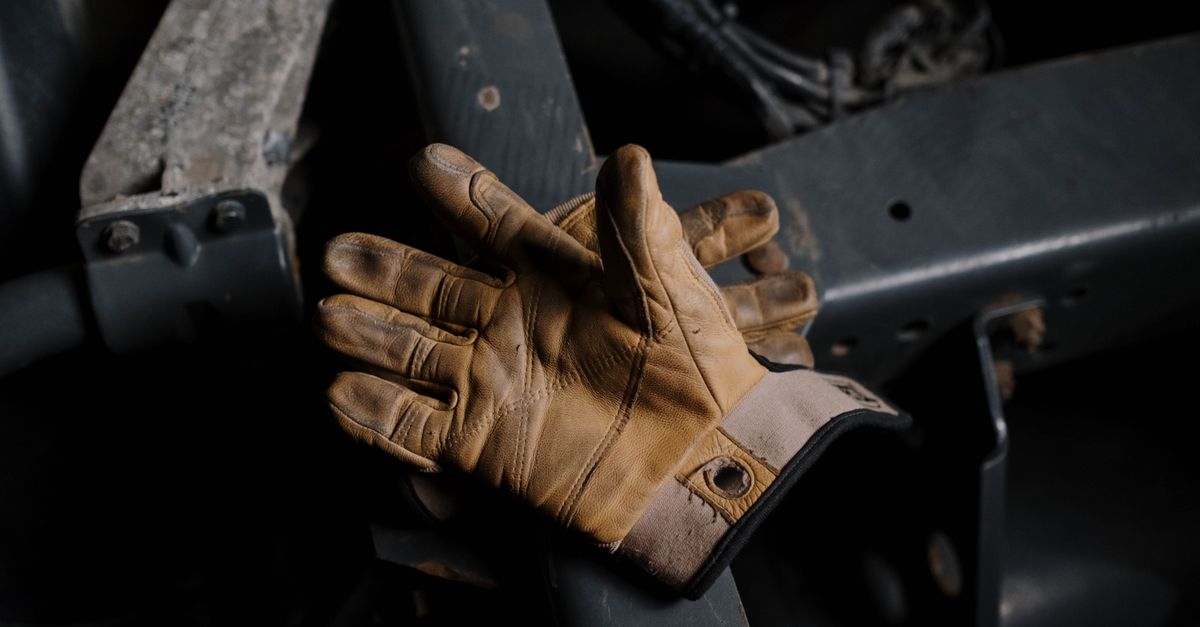
Sourcing as an industrial protective gloves manufacturer for automotive machinery oil handling and maintenance in Central Asia means matching gloves to real workshop tasks, then locking down packing, weights and documents before the first container ships. Buyers in Kazakhstan, Uzbekistan, Kyrgyzstan, Turkmenistan and Tajikistan often distribute to auto service chains, fleet workshops, machinery dealers and industrial maintenance contractors. Those end users rarely have one single task, so a mixed, clearly specified order usually works better than a single generic glove.
This guide explains how to compare materials and constructions against actual tasks, how to read the reference packing data we publish, and which details to confirm before requesting a quotation.
Start from the task, not from the product name
Automotive and machinery maintenance work splits into several different hand-protection problems:
- Oil handling and parts washing — contact with lubricants, degreasers and solvents, plus a need for grip on slippery metal.
- Wet work and cleaning — wash bays, coolant, water-based cleaning agents.
- Mechanical assembly and repair — abrasion, sharp edges, repeated handling of tools and components.
- General maintenance — a bit of everything, usually bought in the largest volume.
Nitrile directions are commonly chosen where oil and chemical contact is the main concern, while latex protective gloves are often used for wet work and general handling where flexibility and grip matter. Neither material is universally suitable: resistance depends on the specific substance, exposure time, thickness and texture. Ask your end users which chemicals and tasks dominate, and treat any material recommendation as a starting point for task-specific assessment rather than a guarantee.
Compare construction, texture and cuff before choosing a model
Two gloves made from the same material can behave very differently. When comparing samples, look at:
- Piece weight and thickness — heavier pieces generally suit rougher, longer-duration handling; lighter pieces suit dexterity and frequent changes.
- Texture — a diamond or raised texture helps with oily and wet grip; smooth finishes suit tasks where grip is less critical.
- Cuff length — longer cuffs protect the wrist and forearm during wet work and oil handling; shorter cuffs are easier to don and remove.
- Construction — supported versus unsupported, seamless knit versus dipped, and the finish on the palm all change feel and durability.
Our industrial latex gloves and disposable nitrile gloves pages show the directions we currently offer. Construction, grip, cuff and documentation vary by model, so confirm the exact SKU against your task list rather than assuming two "nitrile" or "latex" products are interchangeable.
Reference packing data: read it as model-specific, not universal
Buyers planning container loads need packing numbers early. The values below are user-supplied reference-sheet values for specific models, not universal specifications. They are useful for rough planning, but the exact SKU, current packing list, carton measurements, gross weight, container loading and destination-market documents must be confirmed before quotation or shipment.
Heavy-duty orange diamond-texture nitrile (reference model):
- 7–8 g per piece
- 50 pcs per box, 10 boxes per carton
- Box: 24 × 12.5 × 7.5 cm; carton: 39 × 26.5 × 25.5 cm
- Indicative carton weight about 4.5 kg
Latex protective gloves (reference models, one pair per bag, sizes S/M/L):
| Length | Weight per pair | Pairs/carton | Carton size (cm) | N.W. / G.W. | 20GP / 40GP / 40HQ (approx. cartons) |
|---|---|---|---|---|---|
| 32 cm | 60–110 g (custom OEM range) | 200 | 59 × 37 × 24.5 (0.0535 m³) | 20 kg / 22 kg | 617 / 1,252 / 1,421 |
| 38 cm | 90–130 g | 200 | 60 × 45 × 25.5 (0.0689 m³) | 22 kg / 24 kg | 479 / 973 / 1,103 |
| 45 cm | 120–140 g | 150 | 50 × 30 × 40 (0.06 m³) | 21 kg / 23 kg | 550 / 1,116 / 1,266 |
| 55 cm | 170–200 g | 150 | 65 × 35 × 35 (0.0796 m³) | 28.5 kg / 30.5 kg | 414 / 841 / 954 |
Three weights appear in this table and they are not the same thing:
- Piece weight (or weight per pair) describes the glove itself and drives the feel and durability.
- Net weight (N.W.) is the glove content in a carton.
- Gross weight (G.W.) includes gloves, bags, boxes and the carton — this is what freight and handling charges are based on.
Container figures are approximate and depend on actual loading, palletisation and carton condition. Do not convert them into a fixed order quantity without written confirmation.
Plan the order around MOQ, samples and lead time
- MOQ: disposable gloves are quoted by full container — 40HQ, 40GP or 20GP. Latex protective gloves have an MOQ of 10,000 pairs, available under the JUNDA brand or as OEM.
- Samples: free of charge. The buyer's own international courier collects from our Guangzhou factory and the buyer pays the courier directly. Please contact us by email or WhatsApp before booking the pickup.
- Lead time: 15–30 days; the exact date is confirmed with the order.
- Certificates: masked previews are shown on the Quality page, and full documents are available on request. Logos or certification marks visible in artwork are not proof of current certification — always request the current document set for your destination market.
For Central Asian buyers, it is worth confirming early whether your import route requires specific documentation, labelling language or marking, and whether your distributor needs retail-ready boxes or plain export cartons. These choices affect packing configuration and therefore carton weights and loading.
How the quotation is built
We do not publish a single unit price, because the number depends on several variables: material, piece weight, size mix, box and carton configuration, artwork, order quantity, destination and freight terms. To get an accurate quotation, send us:
- The exact SKU or product direction you are considering.
- Estimated quantity and size breakdown.
- Packaging preference (bulk, retail box, OEM artwork).
- Destination city or port and preferred Incoterm.
- Any documentation or labelling requirements.
With those details we can confirm the current packing list, carton measurements, gross weight and loading plan alongside the price. Payment arrangements follow the quotation and contract. More detail on how we work with buyers is on our buying page.
A short checklist before you commit
- Match material, texture, thickness and cuff to each task group, not to the whole catalogue.
- Separate piece weight, net weight and carton gross weight in your own cost calculations.
- Treat all packing and loading figures as indicative until confirmed in writing for the exact SKU.
- Request current certificates and destination-market documents rather than relying on artwork.
- Confirm MOQ, sample courier arrangements and lead time before planning promotions or deliveries.
Central Asian automotive and maintenance markets reward suppliers who can keep specifications stable across repeat orders. The most useful first step is a clear task list and a target quantity — from there, the glove selection and packing plan become much easier to confirm.
This article was prepared with automation assistance and reviewed against Junda's product and export-content rules.