
<!-- article_id: junda-latex-gloves-europe-quotation-guide -->
If you are sourcing for a distributor, pharmacy chain, food-service group or care-home network, the search for the lowest unit price MOQ and quotation for latex gloves in Europe usually ends the same way: you need a real quotation, not a headline price. This guide explains what actually drives the number you receive, which reference values you can use for planning, and what to confirm before you compare suppliers.
Why there is no universal "lowest unit price"
A published price per 1,000 pieces is only meaningful when the specification behind it is fixed. Two latex gloves can look identical in a catalogue and still land at very different unit prices because of:
- Material and model – natural-latex disposable, examination, household or long-cuff programs are different products with different construction and piece weights.
- Piece weight – the grams per glove. Heavier gloves use more raw material.
- Size mix – a carton of mixed sizes (S/M/L/XL) is packed differently from a single-size carton, and the mix affects how efficiently the order is produced and packed.
- Surface and cuff – powdered or powder-free, smooth or textured, rolled or beaded cuff. Each option changes the process.
- Box and carton configuration – 100 pcs/box and 10 boxes/carton is a common reference, but dispensers, polybags and unit-packed pairs are different projects.
- Artwork and branding – printed boxes, private-label design and logo placement add tooling and print setup.
- Order quantity – MOQ is set per SKU, not per order, and small runs carry a higher unit cost.
- Destination and freight terms – the same goods quoted EXW, FOB or DDP Europe produce very different landed numbers.
Because of this, Junda does not publish a numeric "lowest price." We quote against your exact specification. If a supplier does publish one, treat it as a starting point for a specific SKU, not a market floor.
Reference specifications you can use for planning
The values below are model-specific reference figures, not universal specifications. Use them to sanity-check a quotation or estimate container loading, then confirm the exact SKU, current packing list, carton measurements, gross weight, container loading and destination-market documents before you commit.
Standard 9-inch latex examination / food-handling reference:
| Item | Reference value |
|---|---|
| Material | Natural latex |
| Length | 24 cm |
| Piece weight | 6.5 g/pc (reference) |
| Packing | 100 pcs/box, 10 boxes/carton |
| Box dimensions | 24 × 12.5 × 7.5 cm |
| Carton dimensions | 39 × 26.5 × 25.5 cm |
| Indicative carton gross weight | about 6.5 kg |
Unit-packed two-piece / pair packaging can be discussed as a project option. Exact pieces, pairs and sterilization requirements must be confirmed for your program.
Piece weight, net weight and carton gross weight are three different numbers
This is one of the most common sources of quotation confusion in European procurement:
- Piece weight – grams per single glove (for example, the 6.5 g/pc reference above).
- Net weight – the total weight of the gloves in a carton, excluding packaging.
- Carton gross weight – gloves plus boxes, polybags, carton board and any inserts. This is the figure freight forwarders and pallet planners need.
A carton of 1,000 gloves at 6.5 g/pc has roughly 6.5 kg of gloves, but the indicative carton gross weight in the table above is also about 6.5 kg because the reference packing is compact. Do not assume net and gross are interchangeable — always ask for the current packing list.
What MOQ really means for latex gloves
MOQ is normally quoted per SKU, not per purchase order. That means:
- One size, one surface, one packaging format = one MOQ.
- If you need S, M, L and XL in printed boxes, you may be looking at four separate minimums, or a negotiated combined run.
- Private-label artwork usually raises the effective MOQ because of print setup and box tooling.
- Mixed-size cartons can sometimes reduce the total MOQ, but the size ratio must be agreed in advance.
When you ask for a quotation, state whether your MOQ is a trial order, a first production run or a repeat program. Suppliers price these differently.
The quotation variables you should confirm in writing
To get a comparable quotation, send the same brief to every supplier. At minimum, confirm:
- Exact SKU – model name, material, length, piece weight, surface, cuff type, powder status.
- Size breakdown – quantities per size, and whether cartons are single-size or mixed.
- Packaging – pieces per box, boxes per carton, box and carton dimensions, artwork ownership.
- Order quantity – total pieces and quantity per SKU.
- Destination – port or inland delivery point in Europe.
- Incoterm – EXW, FOB, CIF, DAP or DDP. The Incoterm changes who pays freight, insurance and import duties.
- Documentation – which certificates, test reports and declarations you require, and for which destination market.
- Labeling – language, CE marking requirements, lot and expiry information, barcode format.
Only when these are fixed can a supplier give you a unit price you can compare fairly.
Documentation: confirm by product and destination market
European buyers often ask for certification and test documentation up front. Two practical rules:
- Documentation must be confirmed by product and destination market. Requirements differ between EU member states and between applications (medical examination, food handling, general protection). A document that satisfies one market may not satisfy another.
- Logos or certification marks visible in promotional artwork are not proof of current certification. Artwork is marketing material. Always request the actual current certificate or test report for the exact SKU you are buying, and verify its scope and validity.
Junda will confirm which documents apply to your specific product and destination before quotation or shipment. We do not treat catalogue artwork as evidence of certification.
Choosing the right latex glove for the task
The lowest unit price is only the lowest total cost if the glove fits the job. Compare your actual task against the options:
- Examination / care environments – fit, tactile sensitivity and consistent piece weight matter more than raw thickness.
- Food handling – check length, surface texture for grip, and whether the glove is suitable for contact with the specific food type.
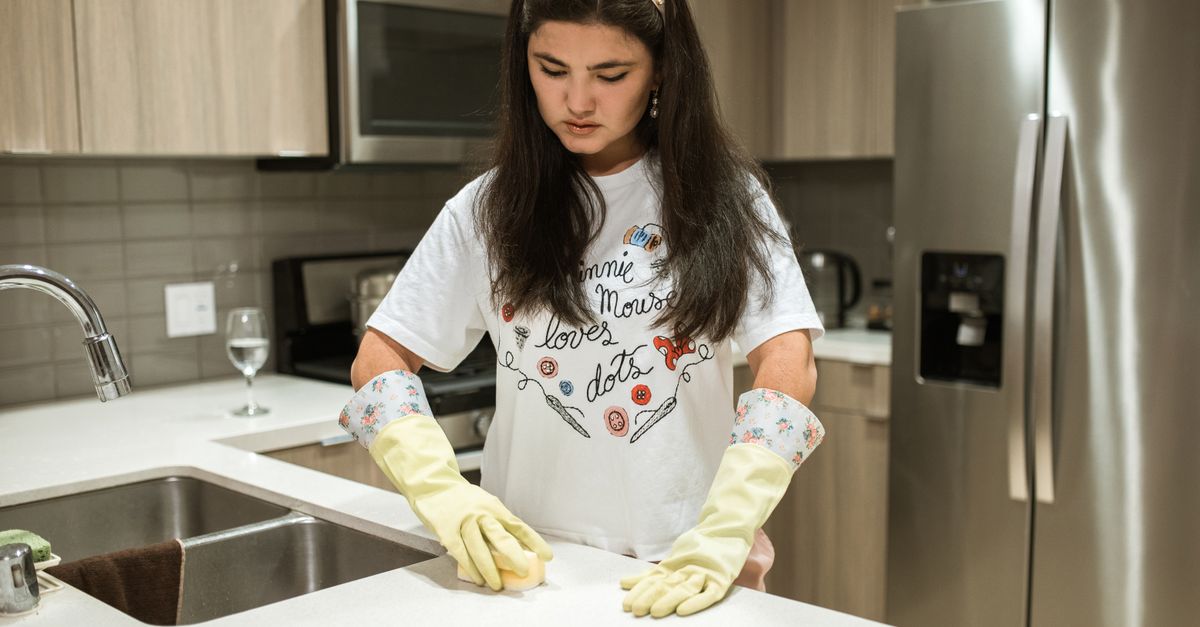
- Household and cleaning – longer cuffs and heavier construction may reduce glove changes per shift.
- Long-cuff programs – confirm cuff length and fit against the forearm protection your users need.
No single specification is universally suitable. Match material, texture, thickness and cuff choice to the task, then price that specification.
Where to start
- Review the disposable range: /products/disposable-latex-gloves
- Review a protective latex option: /products/yuelong-a3-latex-protective-gloves
Then send Junda your exact SKU, quantity, packaging, destination and Incoterm. We will confirm the current packing list, carton measurements, gross weight, container loading and destination-market documents, and return a quotation you can compare line by line.
This article was prepared with automation assistance and reviewed against Junda's product and export-content rules.